Dem comot Igbo from one textbook on Nigerian history?
Wia dis foto come from, Getty Images
- Author, Chiamaka Enendu
- Role, BBC Global Disinformation Unit
- Read am in 7 mins
Di careful reintroduction of history into di school syllabus afta 16 years of break face test from social media users wey claim say one book comot one of Nigeria largest ethnic groups.
Last month Umelo Victor, wey tok about different political and social issues online, share Facebook video wia e criticise one textbook wey e say im son dey use for class - dem am call Living History Book 1.
E allege say di book comot di Igbo ethnic group and dis one fit be risk to comot di Igbos from Nigeria history.
Dem view im video more dan 300,000 times and dem share am over 2,000 times and di concerns attract audience on TikTok too.
Vivian Ifeoma, wey dey usually produce content about di Igbo pipo and culture, also react to di issue.
Her video attract thousands of views and reposts wey debate di allegation of Igbo exclusion from di publication, and cause reaction from political observers.
Oga Victor tell di BBC say e dey refer to di first book for di series. Di second book cover di Igbo ethnic group in greater depth, di BBC find out, wey dey in accordance wit di national curriculum.
Di publishing company say all di texts dey based on dis national teaching plan.
Oga Victor stand by im claims but say e neva see di later books.
Wetin begin as a single complaint quickly grow into a wider conversation about representation for Nigeria classrooms, how books dey approved and di sensitivities around teaching history in school.

Wetin dey dis book?
Nigeria officially recognise three major ethnic groups: Hausa, Yoruba and Igbo, wey togeda make up about 70% of di population. Di kontri also be home to hundreds of oda ethnic communities.
Critics claim say di material leave out key aspects of Igbo history.
However, di publishing company Accessible Publishers defend di content and tell di BBC say Book 1 dey discuss di pre-history of di Igbo pipo and di second book "highlight di rich culture and civilization of di Igbo empire".
E add say e dey open to "collaboration wit authors from di Igbo community to further enrich di publications".
Much of di online conversation dey about Book 1, wey di blurb say di book go "allow students appreciate di basis of unity for Nigeria".
Di BBC buy copies of Books 1, 2 and 3.
While di first volume list di Igbo wey dey among Nigeria major ethnic groups and languages on page 15, some oda groups each get dedicated chapters wey range from three to nine pages, and e detail dia origin, culture, governance and economy.
Wia dis foto come from, Getty Images
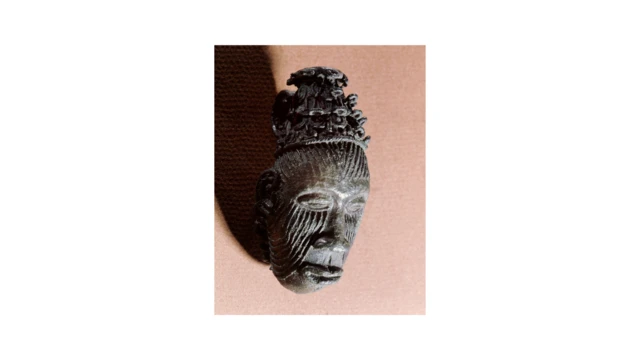
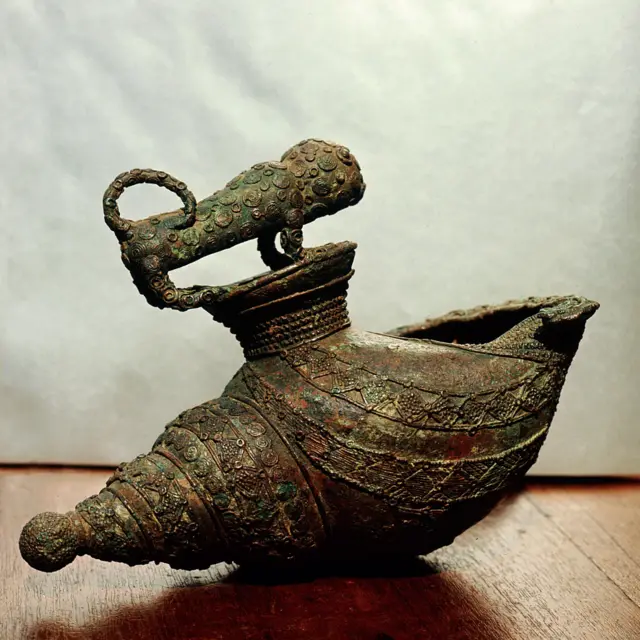
To compare, dem tok about Igbo under di prehistory section for di "early centres of civilisation" chapter, and e reference di Nok, Ife, Benin and Igbo Ukwu archaeology, without any full chapter wey explore dia broader historical development.
E get references to three early Igbo Ukwu artefacts.
However, di way di curriculum dey designed fit help to explain di structure of di books, wey come as three series.
According to di NERDC scheme of work for junior secondary schools, JSS1 history dey focus mainly on di meaning and sources of history, historical sites and major centralised states for pre-colonial Nigeria. Major centralised states include di Hausa-Fulani emirates, Oyo Empire, Benin kingdom and odas.
For di next class (JSS2), history expand to cover non-centralised societies for pre-colonial Nigeria and early West-African history. Some non-centralised groups for Nigeria na di Igbo, Idoma, Tiv, Isoko and odas.
Hia, e get a more detailed discussion of di Igbo ethnic group wey cover dia origin, tradition, social and political organisation, economy and governance structure.
Dis help to explain why di Igbo dey in more detail for Book 2 as di Nigerian history curriculum require.
Professor of History for di University of Ibadan, Olutayo Adesina say e no dey surprised as di allegations of underrepresentation dey raise correct kwesions.
"For kontri wit history of mutual suspicion, pipo dey quick to interpret imbalance as deliberate," Prof Adesina tell di BBC.
"Di key question na weda evri major group get equal attention," e add.
Frank Omoba, one secondary school history teacher for Abuja say practical reasons fit dey behind how di books dey sequenced.
"Centralised systems, wit clear rulers and hierarchies, dey usually dey easier for younger students to understand," e tell di BBC.
E say by JSS2, students dey more comfortable wit more complex ideas: "Non-centralised societies require more explanation becos authority dey shared. E dey some tin wey dem design as a step-by-step progression in learning."
Who dey read am ?
Di Nigerian Ministry of Education say di book no dey approved for use in schools and dem neva submit am to di National Educational Research and Development Council (NERDC) for review. So how dem come dey use am for classrooms, as di social media users allege?
Wen e tok to di BBC, oga Victor say im son, wey dey di first year of secondary school, dey use di book for one private school for Port Harcourt.
E maintain say di book must get some level of approval.
Di school, oga Victor refer to confam to di BBC say dem dey use di book, wey form part of dia "approved learning materials".
E add say while di school dey take di Ministry recommended booklist into account, dem no dey rely on am exclusively and all textbooks dey reviewed internally to ensure say dem meet di school educational standards.
Di school add say dem neva receive any formal complaints from parents about di textbooks wey currently dey in use.
In Nigeria, textbooks wey dey intended for public schools typically dey undergo a review process wey dey coordinated by di NERDC bifor adoption by federal or state ministries of education.
However, private schools dey usually get right to select supplementary materials, wey fit no always dey di NERDC official recommendation lists.
"Many schools rely on books wey dey affordable and accessible," a school administrator for Lagos, Sarah Amanah tell di BBC. "For some cases, administrators fit assume say a book dey vetted if e dey widely sold in major bookstores."
She add say teachers typically dey work with di materials wey dey provided by school management.
Education sabi pipo say dis kain tin fit sometimes lead to confusion about wetin qualify as "approved" textbook.
Adekunle, one bookseller for Yaba, Lagos state, say e don sell over 6,000 copies mainly to individuals and private schools since di beginning of di school year in September 2025.
Wia dis foto come from, Getty Images
Di history of history
Nigeria school curriculum don change several times since independence.
Under di education system wey bin dey introduced in di early 1980s, dem remove history from junior secondary schools and replace am wit social studies. But history remain available in senior secondary schools, as an optional subject.
In 2009, dem fully remove history as a stand-alone subject in primary and junior secondary schools under a new basic education curriculum, and merge am with social studies.
However, di move dey widely criticised, as some policy analysts suggest say sensitivities around teaching divisive periods of Nigeria past go don influence di decision.
Wen di subject come later dey reintroduced as a compulsory subject in 2025 for both primary and junior secondary schools, e bin dey widely welcomed but closely watched.
Some historians say di online debate dey highlight more kwesions about public trust.
Historian Chinedu Okafor, for Benin City, tell di BBC say representation in school books carry symbolic weight becos di removal of history from schools curriculum bin create a generation with limited formal exposure to di kontri historical context.
Debates about representation dey legitimate, e tok, but to give voice to unverified claims "get risk of undermining trust in both educational institutions and in di broader national narrative."
Beyond di immediate controversy and approval of school books na a deeper concern about historical distortions.
"History suppose improve human understanding," Prof Adesina tok.
"Dat na why we must approach am carefully, with evidence and context." .