Waste Management
This guidance provides information on how to manage wastes arising from BBC activities in order to ensure good environmental practice and compliance with relevant legislation.
Updated: 27 October 2022
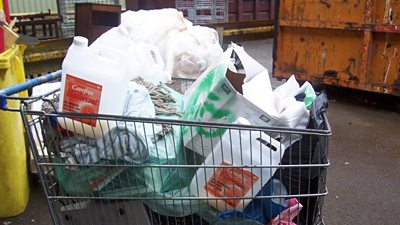
Waste for the purposes of this guide is any product that is discarded or disposed of, including paper and other materials that are destined for recycling.
What Can Go Wrong?
- Waste if not correctly identified and managed can have a number of environmental impacts in its generation, storage and disposal.
- Waste streams that are not identified prior to an activity commencing could be managed incorrectly resulting in pollution.
- Waste storage if not done correctly or if left open to vandals or the elements, can cause significant contamination of land, groundwater, or nearby water courses.
- Waste disposal if not sent to a suitable waste carrier can create air pollution or can result in waste being disposed of via unlicensed facilities.
Legal/BBC Requirements
- Waste management is tightly controlled by legislation. Waste producers must store waste safely and securely, comply with the Duty of Care and ensure that the waste hierarchy is applied during the disposal.
- From Jan 2014 the Environment Agency in partnership with the waste sector is rolling out a free-to-use online system for electronic duty of care (edoc). Edoc will provide an alternative to paper Waste Transfer Notes (WTN). The electronic system is currently voluntary and paper WTNs can still be used. Productions that use waste contractors to take their waste away should be aware that they may encourage use of the online system.
Control Measures
Failure to correctly identify wastes
- Before undertaking any activity that could generate wastes try to apply the waste hierarchy i.e. reduce, re-use, recycle. Identify the types of waste that could arise and ensure that the following are kept separate from other wastes:
- Hazardous wastes [i.e. batteries and fluorescent tubes]
- Confidential wastes [i.e. personal information]
- Liquid wastes [i.e. paint and paint from floor washings]
Failure to store wastes correctly
- Before undertaking any activity that could generate waste ensure that appropriate storage facilities exist for disposal.
- Hazardous wastes must be stored in containers designed for their disposal.
- Confidential waste must be in locked containers and in a secure room.
- Liquid wastes must be in suitable containers and must be in a bund or chemsafe unit.
Failure to dispose of waste correctly
- Before undertaking any activity that could generate waste ensure that appropriate contractors are appointed to remove it safely and legally.
- All wastes must be removed by a waste carrier licensed for recycling or disposed of at a facility licensed for that particular type of waste.
- All wastes must be transferred to recognised contractors that have gone through standard procurement checks by BBC Procurement.
- All waste collection must be covered by a suitable Waste Transfer Note, Waste Consignment Note or edoc.
- These notes must be kept for a minimum period of two years for non-hazardous waste and three years for hazardous waste.
Please note, this is not an exhaustive list; additional controls may be required and there may be more risks to consider.
Division Specific Issues
Production, Events and Radio
- Particular attention should be given to the disposal of liquid wastes from location facilities vehicles – liquid waste must not enter surface water drains.
- Waste waters from special effects must go to foul sewer and may require consent from the local sewage undertaker.
- Studio floor paint wash off must be removed by a specialist contractor or via on site treatment where applicable.
Workplace
- Site Waste Management Plans may be required for construction and demolition projects.
- Duty of Care files must be maintained at all sites and waste data must be reported in line with the BBC’s reporting guidelines.
- List any specific risks or controls unique to a division or programme department.
FAQs/Did You Know?
- National electronic duty of care programme (edoc): The edoc programme aims to modernise the way waste data is collected in the UK. It will create a national web-based system to capture information from production to collection, transportation, treatment and disposal of waste.
Recommended links
- Workplace Environment team[BBC Network only]
Environment topics
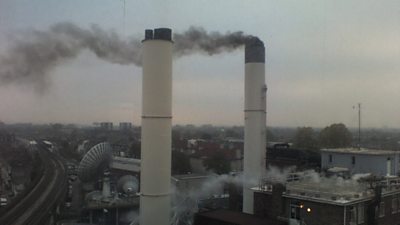
Air Pollution
Air pollution can have damaging effects on human health and the environment and it is crucial to minimise emissions to the atmosphere.

Built Environment
In the UK these impacts are controlled by legislation, particularly planning law.
Energy Management
This guidance provides information on energy management associated with BBC activities in order to ensure good environmental practice and compliance with relevant legislation.
Environment on Production and Events
This guidance provides information on how to reduce the risk of environmental incidents, nuisance or legal non-compliance whilst making programmes and running events.


