Electrical Competency and Part P requirements
What to look for when employing contractors or freelancers to do electrical work, including requirements for ‘18th Edition’ updates and the requirements of Part P of the Building Regulations
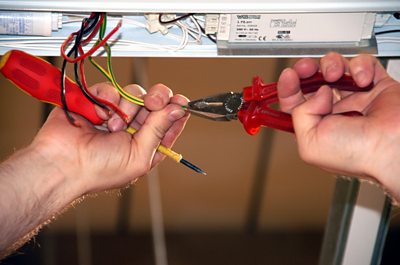
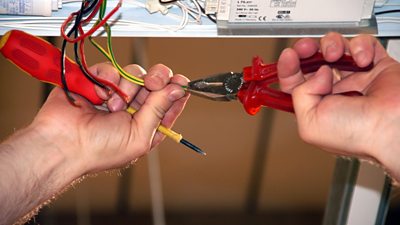
Competency in relation to electrical work is broadly defined as a person having appropriate technical knowledge, skills and experience to prevent danger or injury. This can be further broken down into:
- Adequate knowledge of electricity and electrical protective measures;
- Adequate experience of electrical work, including an understanding of the type of system to be worked on;
- An ability to recognise the hazards that may arise and whether it is safe to continue work.
The degree of knowledge, experience and skills necessary will vary according to the work undertaken. Evidence of technical knowledge is usually demonstrated by training and qualifications. Experience is either ascertained by following up references for previous employment or checking CVs or work portfolios.
Qualifications
While there is no legal requirement to have electrical qualifications to do electrical work, they do provide a ready means of identifying whether an individual has appropriate knowledge. An ‘electrician’ is generally considered to be a person who has completed a 3-4 year apprenticeship and holds a Level 3 technical and vocational qualification or Level 3 Diploma in electrical crafts.
Domestic work and ‘Part P’
Electrical installation work carried out in a domestic property (such as for a program like DIY SOS for example) is under the scope of Part P of the Building Regulations in England and Wales. Such work should either be carried out by using a Part P registered contractor (listed at https://www.competentperson.co.uk/ ) or it can be completed by a non-registered person but the work must be notified to the Building Inspector at the Local Authority concerned, prior to the work starting. Electrical work in Scotland or Northern Ireland is subject to different requirements (see links to IET guidance).
Temporary systems
It is a mandatory requirement for every BBC production to have as part of the crew at least one person who has completed the Creative Skillset Certificate (or equivalent) in Temporary Electrical Systems since April 2016. Freelancers may be permitted to work on temporary systems without it, if they are under effective supervision. This course was turned into a City & Guilds Accredited Training Program in January 2018 and the old Creative Skillset course is no longer available.
Equipment Testing
Competency to undertake testing of electrical equipment (commonly referred to as Portable Appliance Testing) could be demonstrated by way of in-house training or a formal, industry-recognised qualification such as the C&G 2377 (though this qulaification is not necessarily suitable for those working with production equipment). As with all electrical work, remember that the qualification/training alone may not fully demonstrate competence, as an element of real-world experience will be required.
What Can Go Wrong?
If someone performs electrical work without adequate training, knowledge or experience appropriate to the work being undertaken, they could injure themselves and others or create a fire risk. Examples where insufficient electrical skill could be hazardous include:
- Employees trying to fix faulty equipment themselves
- The use of excessively long extension leads, cables coiled up or left on drums
- Crew disabling RCDs on distribution equipment used in temporary systems
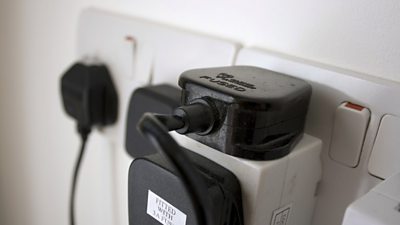
- Inappropriate use of electrical equipment such as overloading circuits
Legal/BBC Requirements
- The Electricity at Work Regulations 1989 (EAWR) requires those working with electrical systems to have sufficient competence to do so.
- Requirements for the BBC are given in the document BBC Guidance on electrical competencies (see links)
- The popular ‘18th Edition update’ course (or the previous 17th Edition one) is not an electrical qualification and should not be treated as such. They should be considered as professional development for people already electrically skilled by other routes.
- The BBC has a detailed position on the need to do the update course in the following document BBC Position on 18th Edition of Wiring Regulations qualifications
- If you do work in domestic properties (e.g. as part of a production) check to see if it is classed as ‘Notifiable’ work coming within the scope of Part P of the Building Regulations or Scottish/Northern Irish equivalents (see links to IET guidance)
- Check that freelancers or staff have sufficient electrical training and qualifications appropriate to the work they are undertaking
- Employees must not do any electrical work if they have not had appropriate training or approval from their line manager.
Division Specific Issues
- This guidance applies across the BBC.
Useful documents
BBC Guidance on electrical competencies[BBC Network only] Version 8. May 2023 BBC Position on 18th Edition of Wiring Regulations qualifications[BBC network only] Version 3. May 2023
Recommended links
- Certificate in Temporary Electrical SystemsElectrical safety training course designed to ensure those working with electricity in temporary distribution systems on productions can comply with BS 7909
BBC electrical safety topics
Electrical safety homepage
A selection of guidance documents and general advice in relation to Electrical Safety in BBC premises, on productions and events.

BBC policies for electrical safety
BBC policies detailing its overarching approach to the management of electrical safety.
BBC electrical safety guidance documents
Summary of BBC electrical guidance (links within document titles)
Electrical risk assessments and reporting of incidents
This section will help those who need to do a risk assessment where electricity is being used. It also gives guidance on reporting requirements for any electrically-related incident.